
Movement
Your physical presence is a huge part of your acting toolkit. Knowing how to move on stage and screen will help you command a character and physically tell the story.

Define Your Physical Presence
Your physical presence is a huge part of your acting toolkit. Knowing how to move on stage and screen will help you command a character and physically tell the story.
Movement Classes are specialising in Physical Storytelling
Throughout the course students will be doing warm up exercises, games and improvisations. They will be creating etudes, characters and scenes and presenting them to the class. All work is practical and involves a lot of creativity and imagination. Course is designed to help students learn what their bodies are capable of, loosen up and use their physicality as a tool in their acting and character creation.
Is entirely dedicated to mime and development of ability to create physical illusion and operate in illusionary world through movement of the body. Students explore the principles of Gesture and Physical Action, to gain a deeper understanding of its application in practical theatre work based on the teachings of Ethienne Decroux as well as application of classical mime “alphabet” as taught by and Ethienne Decroux and Marcel Marceau.
Mime work will continue throughout the entire 4 terms.
As student’s movement ability develops, they are introduced to various tools of the trade.
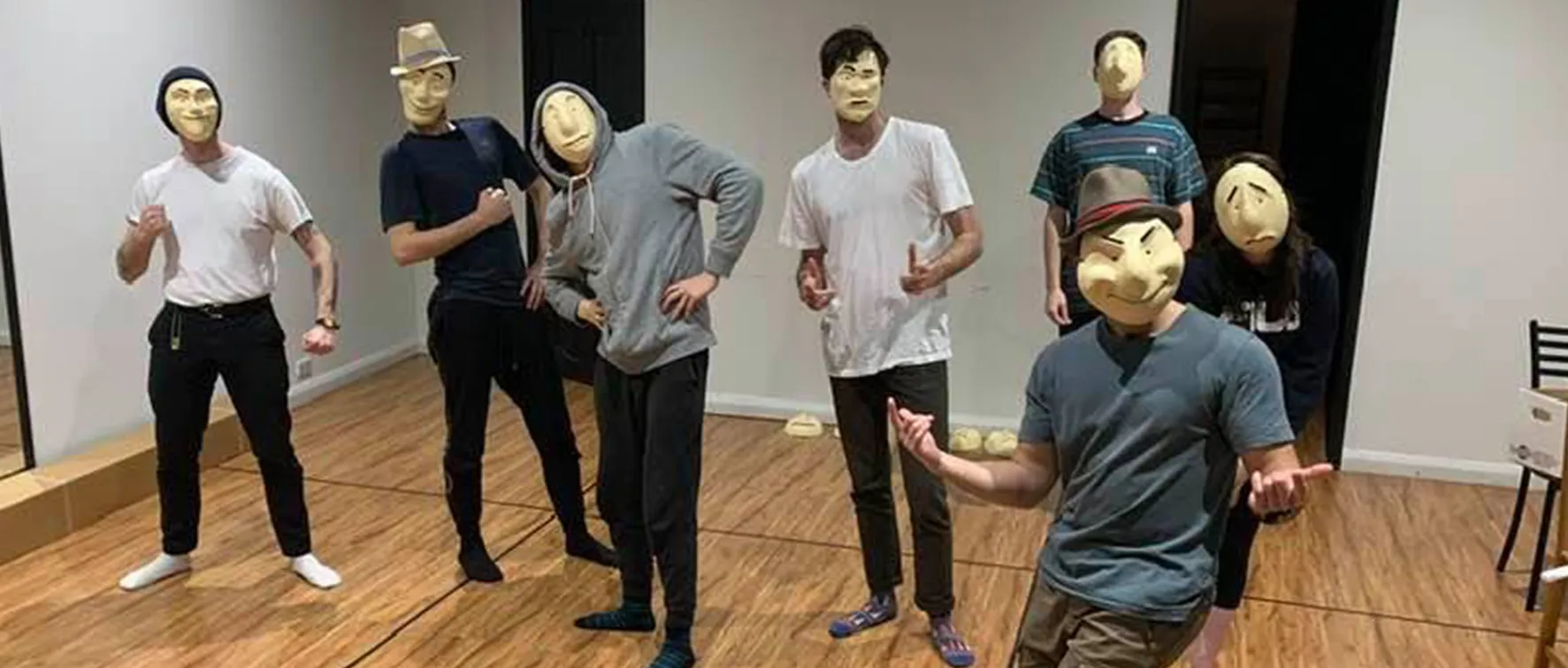
Is dedicated to identifying, understanding and learning to use various movement concepts and tools, such as Neutral Mask and Character Mask. Students explore and understand how Expressive Masks structure and simplify the playing style by delegating to the body the job of expressing their essential attitudes and character.
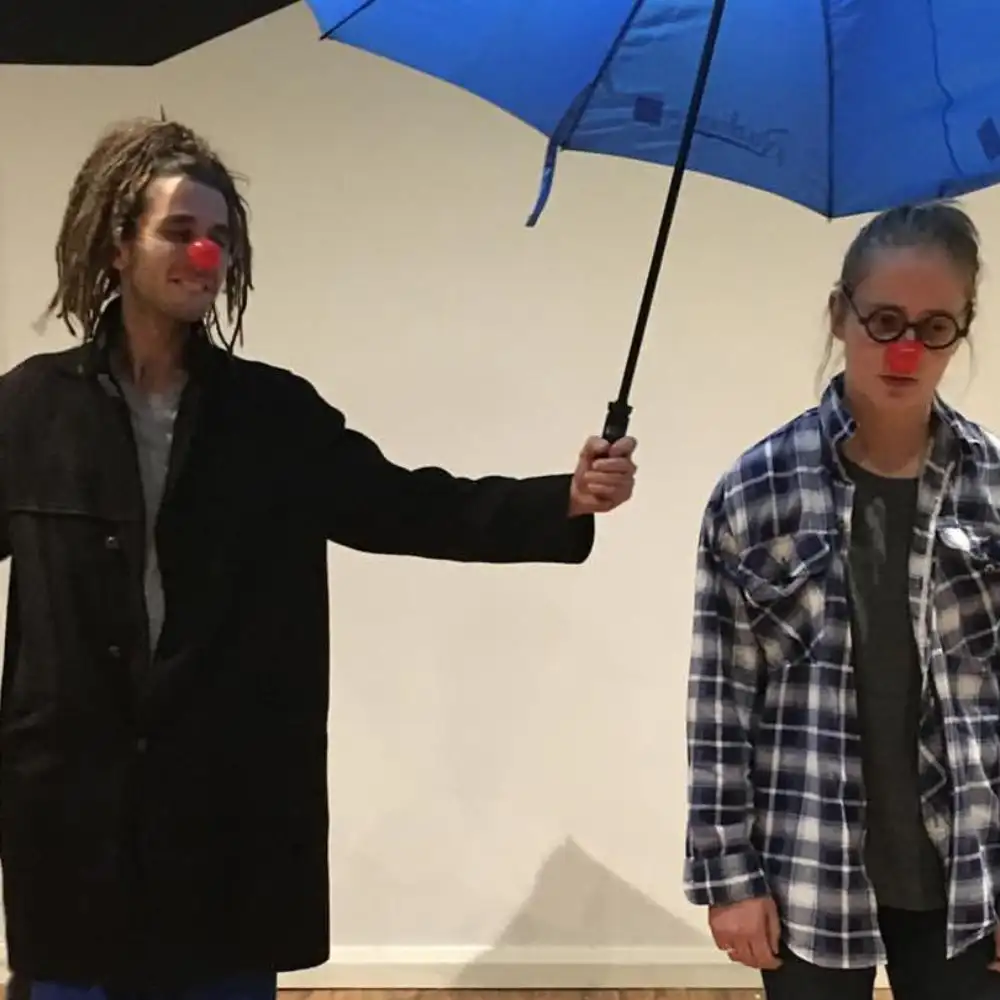
Is continuation of work in term 2. More tools of trade are introduced such as red nose – smallest mask in the world, Theatrical Clown work – Red Clown/White Clown. Students will examine and discuss Commedia Del Arte (no physical work is scheduled on Commedia), concept of “from oneself” “against oneself”, use of colour, movement, costume, sound in creation of a character.
Is putting it all together. Students will be creating their characters, consolidating their new storytelling skills and devising their own End of Course individual and group performance.
Our Movement Classes will Introduce You To:

Price Per Term
Duration & Schedule
What Kind Of Classes Are You Looking For?



Live & Interactive Online Acting Classes
Join our real-time classes from anywhere. Same Meisner-trained tutors, live feedback, full curriculum.
Reviews
Google Reviews
4.8 / 5 from 208+ verified reviews
Frequently Asked Questions
What is the main goal of the Movement Classes at The Actors Pulse?
The primary aim of our Movement classes is to help actors develop body awareness, physical expressiveness and spatial intelligence so their bodies become reliable instruments of storytelling. Through guided exercises, improvisation and structured physical training, students learn how to inhabit their bodies fully and move with purpose, clarity and emotional truth in service of character and narrative.
How does movement training help improve an actor’s performance on stage and screen?
Movement training deepens an actor’s connection between inner life and external expression. By refining control over posture, gesture, breath and dynamics, performers become more present, grounded and truthful. On stage, better spatial awareness means movement supports, not distracts, from the story. On screen, subtle gestures and physical truth become more visible and powerful under the lens.
Movement work strengthens the actor’s ability to be expressive without “doing” too much, to listen with body as well as voice and to adapt instinctively to physical demands or constraints.
Do students perform or create pieces as part of the Movement course?
Yes. Students often collaborate to devise short movement-based pieces or physical scenes within class. These might be guided improvisations, choreographed sequences or expressive explorations related to themes, character or narrative motifs.
While these are not always formal public showings, they give actors opportunities to apply movement principles in creative form, experiment with physical storytelling and receive feedback on clarity, engagement and intention
What acting techniques or philosophies influence the Movement program?
Our Movement course is informed by physical theatre traditions, biomechanics, Laban and Lecoq principles alongside Meisner-rooted approaches to spontaneity and truth. We believe that emotional life is inseparable from the body, so movement training is framed in a way that complements inner work rather than competes with it.
We draw on the wisdom of practitioners who teach that expressive physicality enriches the actor’s toolkit and we always connect movement back to truthful behaviour and organic response.
How does the Movement course integrate with other acting programs like Meisner or Screen Acting?
Movement training is designed to be a vital companion to Meisner and Screen Acting work. By strengthening presence, physical clarity and responsiveness, it supports the honest behavioural foundation of Meisner training.
In Screen Acting, movement awareness helps actors understand how to modulate their physicality for the camera, move intentionally within frame and deliver subtle but expressive gestures. Many students take Movement alongside their Meisner or Screen Acting classes, creating a holistic training regimen that brings together emotional truth, technical camera skill and embodied performance.
When, and how long is enrolment?
Enrolment is on a term by term basis, terms are 8 weeks long and there are 4 terms per year.
Do I need qualifications for this?
No prior qualifications are needed!
Where are classes located?
Classes are held on-site in our Playhouse Theatre at 103 Regent St Redfern.

Contact Us
Get in touch with us using the form or details below. We look forward to hearing from you!